Best Emotional Support Animals for Virginia Apartments — A Clinician-Vetted Lineup
Choosing the right emotional support animal for a Virginia apartment is a decision that lives at the intersection of therapeutic fit, practical living conditions, and federal housing law. Under HUD's guidance notice FHEO-2020-01 — Assessing a Person's Request to Have an Animal as a Reasonable Accommodation Under the Fair Housing Act — housing providers are required to consider reasonable accommodation requests for emotional support animals, even in buildings with strict no-pet policies, provided the resident holds a valid ESA letter issued by a licensed mental health professional (LMHP) licensed in Virginia.
That legal protection is meaningful, but it does not answer a quieter, more personal question: which animal is actually the best therapeutic fit for your living situation, your emotional needs, and the practical realities of apartment life in Virginia? The answer varies considerably from person to person — and, as any responsible clinician will tell you, only a qualified LMHP can determine whether an ESA is therapeutically appropriate for you. What follows is a clinician-informed, informational guide designed to help you arrive at that conversation better prepared.
We have ranked each entry not by popularity alone, but by four criteria that matter most in a Virginia apartment context: space efficiency, noise profile, allergy considerations, and documented therapeutic utility. Read through the full list, then speak with a Virginia-licensed clinician who can evaluate your specific mental health needs and, if appropriate, issue a properly credentialed ESA letter that meets FHA standards.
Disclaimer: This article is provided for informational purposes only. It does not constitute medical, mental-health, or legal advice. No content here should be interpreted as a diagnosis or as a guarantee that any individual will qualify for an ESA letter. Whether an emotional support animal is therapeutically appropriate for you is a clinical determination made exclusively by a licensed mental health professional. For housing disputes involving FHA reasonable accommodation rights, consult a Virginia-licensed attorney or your local legal aid office.
Understanding Virginia-Specific ESA Rules Before You Choose
Virginia does not have a state statute equivalent to California's AB-468 or Louisiana's specific pre-letter relationship requirement, but Virginia residents are still fully governed by the federal Fair Housing Act and HUD's FHEO-2020-01 notice. That notice sets clear expectations: a valid ESA letter must come from an LMHP who has assessed the individual's disability-related need, and the letter must be sufficiently specific to allow the housing provider to evaluate the nexus between the disability and the accommodation requested.
Critically, online "ESA registries," "ESA certifications," and "ESA ID cards" carry no legal weight under HUD guidance or Virginia law. HUD has explicitly flagged these services as misleading. The only document that triggers FHA reasonable accommodation protections is an ESA letter from a properly licensed Virginia LMHP — learn what a compliant Virginia ESA housing letter looks like before you submit any request to a landlord.
With that foundation in place, here are the ten best emotional support animals for Virginia apartments, presented in clinician-informed order.
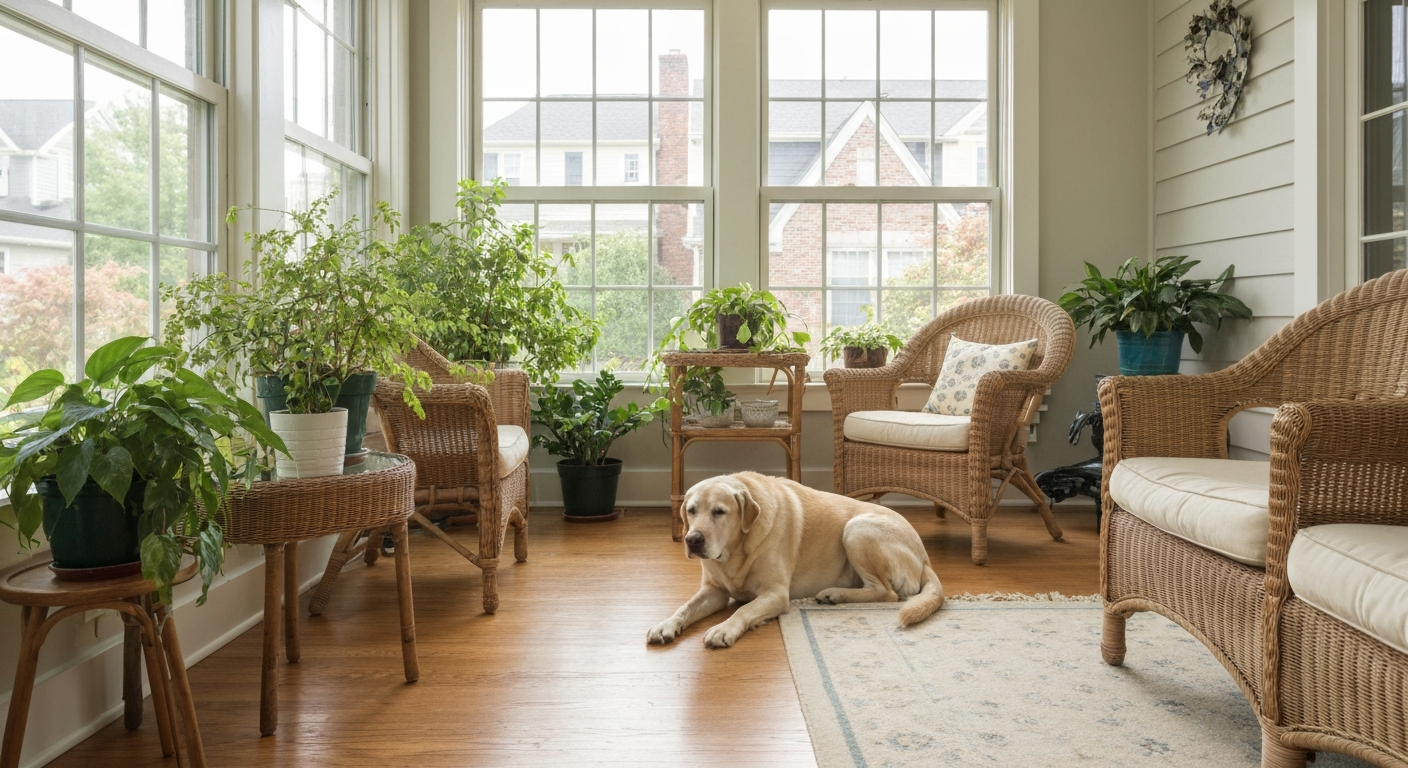
1. Dogs — The Benchmark Emotional Support Animal
Dogs remain the most widely recognized and therapeutically documented emotional support animals in clinical practice. The human-canine bond is among the most studied in anthrozoology: consistent findings across peer-reviewed literature associate dog ownership with reduced cortisol levels, improved mood regulation, and decreased symptoms of anxiety and depression in adults — conditions that many people navigating Virginia apartment life may qualify to address through an ESA. For Virginia residents managing conditions such as generalized anxiety disorder, PTSD, or major depressive disorder, a licensed clinician may find that a dog provides a meaningful therapeutic complement to an existing treatment plan.
In an apartment context, breed and size selection is everything. A 900-square-foot Richmond high-rise unit is not the same living environment as a ground-floor Fairfax townhome with a patio. Apartment-friendly breeds tend to be lower-energy, quieter, and comfortable in confined spaces — think Cavalier King Charles Spaniels, French Bulldogs, Shih Tzus, or Basset Hounds, rather than high-drive working breeds. Noise — specifically, excessive barking — is the most common friction point between ESA dog owners and Virginia landlords and neighbors, so temperament screening matters as much as size. For a deeper look at which breeds tend to thrive in Virginia's apartment landscape, see our guide to ESA dogs in Virginia and the best apartment breeds.
It is also worth noting that dogs require more active management than most animals on this list — daily walks, regular veterinary care, and behavioral consistency. Some clinicians view this structured routine as part of the therapeutic value; the responsibility of caring for a dog can itself provide purpose, schedule, and motivation for individuals experiencing depression or social withdrawal.
Practical Takeaway: If you are considering a dog, research low-energy, quieter breeds suited to smaller spaces, budget for ongoing veterinary costs, and work with a Virginia-licensed LMHP to confirm the therapeutic appropriateness before pursuing an ESA letter.
2. Cats — Quiet, Low-Maintenance Therapeutic Companions
Cats are, in many respects, purpose-built for apartment living — and for a significant segment of the clinical population, the feline temperament offers a therapeutic quality that dogs simply cannot replicate. The low-demand nature of cat ownership suits individuals who find the social pressure of dog walks overstimulating, or whose mental health conditions involve significant fatigue or executive-function challenges. The rhythmic sound of a cat purring has been associated in some studies with parasympathetic nervous system activation — the physiological state of calm — and many therapists working with anxiety or trauma note that clients describe their cats as a grounding presence during dissociative or panic episodes.
From a landlord-relations standpoint, cats are among the easiest ESA conversations to have. They produce minimal noise, require no outdoor access, and their space requirements are modest. Virginia apartment buildings that might push back hard on a large dog often raise far fewer practical objections to a cat — though it bears repeating that under FHA and HUD FHEO-2020-01, a landlord's personal preference is not a lawful basis for denying a reasonable accommodation request supported by a valid ESA letter from a licensed Virginia clinician. Allergy considerations for neighboring tenants are sometimes raised; HUD guidance addresses this scenario, noting that housing providers must engage in an interactive process rather than issue blanket denials.
Breed considerations matter here too, though less dramatically than with dogs. Lower-shedding breeds such as the Balinese, Russian Blue, or Siberian may be worth exploring if building management raises allergen concerns. For a full breakdown of cat breeds and temperament considerations for Virginia apartment dwellers, explore our companion piece on ESA cats in Virginia as quiet therapeutic companions.
Practical Takeaway: Cats offer a low-stimulation, high-comfort therapeutic profile ideally suited to smaller Virginia apartments. Discuss feline ESA options with a Virginia-licensed LMHP if your needs align with calming companionship over active engagement.
3. Rabbits — An Underrated Apartment-Friendly ESA
Rabbits occupy a fascinating middle ground in the emotional support animal landscape: they are physically gentle and visually calming, highly responsive to human interaction, and remarkably well-suited to apartment living in terms of space and noise. A rabbit housed in a properly sized enclosure with daily out-of-cage time requires no outdoor access, produces virtually no sound, and offers a tactile companionship experience — grooming and soft handling — that many clinicians note can be particularly beneficial for individuals who find the sensory intensity of a dog overwhelming but still benefit from physical, living connection.
In Virginia apartment settings, rabbits present minimal neighbor-relation challenges. There is no barking, no loud vocalizations, and their allergen profile, while real, is generally less pronounced than cat dander in shared HVAC environments. Therapeutically, the structured care routine a rabbit requires — feeding, habitat cleaning, supervised exercise time — can provide the kind of gentle daily structure that supports mood regulation without demanding the level of energy that dog ownership requires. For individuals managing depression, PTSD, or autism-related anxiety, a rabbit's quiet responsiveness may qualify as a meaningful therapeutic complement, according to clinical practice observations — though, as always, only a licensed clinician can make that determination for any specific individual.
HUD's FHEO-2020-01 notice does not limit ESA status to cats and dogs; it explicitly covers any animal that a licensed clinician determines provides therapeutic benefit related to a disability. This means rabbits, when accompanied by a properly issued Virginia ESA letter, carry the same FHA reasonable accommodation weight as a dog or cat. Landlords who are unfamiliar with this may need gentle, documented education. For a thorough guide to the Virginia-specific considerations around rabbit ESAs — including housing letter language and landlord communication — see our article on rabbits as emotional support animals in Virginia.
Practical Takeaway: For Virginia apartment residents seeking a quiet, tactile ESA with minimal noise and modest space requirements, a rabbit may be a clinically appropriate and legally protected option under FHA — ask your LMHP whether it fits your therapeutic profile.
4. Guinea Pigs — Small, Social, and Remarkably Soothing
Guinea pigs are among the most frequently overlooked animals in the ESA conversation, yet their therapeutic profile for apartment dwellers is genuinely compelling. These small rodents are inherently social creatures — they vocalize softly with characteristic "wheeking" sounds and are known to respond to familiar human voices and touch in ways that feel meaningfully interactive rather than passive. For individuals who live alone in Virginia apartments and experience loneliness or social isolation as part of a diagnosed mental health condition, the reciprocal social quality of guinea pigs can provide a sense of genuine connection without the logistical demands of a dog.
In practical apartment terms, guinea pigs require a relatively modest footprint: a proper cage of at least 7.5 square feet for a pair (pairs are generally recommended for the animals' wellbeing), fresh hay, daily vegetables, and regular but manageable cleaning. They are not silent animals, but their vocalizations are gentle and unlikely to trigger neighbor complaints in a typical Virginia apartment building. Their lifespan of five to seven years also means a meaningful, sustained therapeutic relationship rather than the brief commitment of shorter-lived small animals. Veterinary care exists in most Virginia metro areas for exotic small mammals, though owners should verify access before committing.
From a legal standpoint, the same HUD FHEO-2020-01 framework that protects rabbit ESAs applies equally to guinea pigs. A thorough, individualized ESA letter from a Virginia-licensed LMHP that clearly establishes the nexus between the individual's disability and the therapeutic role of the guinea pig is the key document. Landlords unfamiliar with small-mammal ESAs may raise questions; having well-organized documentation and a polite, factual approach typically resolves these situations more effectively than adversarial posturing.
Practical Takeaway: Guinea pigs offer a warm, interactive therapeutic presence in a compact, apartment-friendly package — a genuinely underrated option for Virginia residents whose clinician identifies social comfort and gentle routine as therapeutic priorities.
5. Miniature Pigs — High Intelligence, Unique Therapeutic Bond
Miniature pigs — often called "mini pigs" or "teacup pigs" — have gained clinical attention for their remarkable intelligence and emotional responsiveness. Pigs are widely regarded as among the most cognitively sophisticated domesticated animals, capable of learning names, responding to emotional cues, and forming strong individual bonds with their primary caregivers. For Virginia residents managing conditions involving emotional dysregulation or severe social anxiety, some clinicians have noted that the intensive bonding experience of pig ownership may provide a grounding relational anchor. This is, however, a more specialized clinical determination than with cats or dogs — a Virginia LMHP with experience in animal-assisted interventions is best positioned to assess the fit.
The apartment-suitability of miniature pigs comes with important caveats. First, Virginia municipal codes and HOA covenants vary considerably on whether pigs are permitted as residential animals at all — some jurisdictions classify them under agricultural or livestock ordinances regardless of size. This is a legal question specific to your Virginia locality, and we recommend consulting a Virginia-licensed attorney or your county's zoning office before pursuing this path. Second, "miniature" is a relative and sometimes misleading term in the pig-breeding industry; animals sold as teacup pigs can mature to 50–150 pounds. Prospective owners should research reputable breeders and realistic size expectations with great care.
If local ordinances and living conditions permit, and if a Virginia-licensed clinician determines that a miniature pig is therapeutically appropriate, the FHA reasonable accommodation framework does apply. HUD FHEO-2020-01 does not restrict ESA status by species. However, the housing provider's assessment of whether the specific animal poses a direct threat or fundamental alteration of the housing — factors HUD permits them to weigh — may be more scrutinized with an unconventional species. Documentation quality and clinician credibility become even more important in these cases.
Practical Takeaway: Miniature pigs can be extraordinary therapeutic companions for the right individual, but Virginia apartment suitability requires careful legal, zoning, and clinical vetting — consult both a Virginia-licensed LMHP and a Virginia-licensed attorney before proceeding.
6. Birds — Vocal Connection and Cognitive Stimulation
For some individuals, the therapeutic value of an ESA lies specifically in vocal and cognitive interaction — a quality that birds, particularly parrots and cockatiels, deliver with surprising richness. The ability of certain parrot species to mimic speech and respond contextually to human conversation creates an interactive dynamic that some clinicians working with elderly clients, individuals experiencing isolation, or those with depression have described as uniquely stimulating and mood-elevating. A cockatiel perched on a shoulder during a remote work session, or a conure that greets its owner by name, can provide a form of social reinforcement that differs meaningfully from the silent companionship of a rabbit or guinea pig.
Apartment suitability for birds varies sharply by species. Small birds — budgerigars, cockatiels, lovebirds — are generally well-suited to Virginia apartment life, with modest space requirements and manageable noise levels. Larger parrots, including macaws and cockatoos, produce vocalizations that can be extremely loud and are likely to generate legitimate neighbor complaints in shared-wall buildings, which may constitute grounds for a landlord to question whether the accommodation is reasonable under HUD's framework. Dander from birds is also a recognized allergen that may affect neighbors in close-proximity buildings. Selecting a species whose noise and allergen profile is proportionate to your specific building environment is both considerate and legally prudent.
Longevity is another factor worth clinical consideration: some parrot species live for 40–80 years, meaning the therapeutic relationship extends well beyond typical human life planning horizons. This commitment should be explored openly with a clinician as part of a holistic assessment of whether a bird is the right long-term therapeutic fit. As with all ESA species outside the cat-and-dog mainstream, a clearly articulated, individualized ESA letter from a Virginia-licensed LMHP will be essential to a successful reasonable accommodation request.
Practical Takeaway: Birds offer rich vocal and cognitive interaction that may benefit individuals whose therapeutic needs center on stimulation and social engagement — select a species sized and quieted appropriately for Virginia apartment living.
7. Hamsters and Gerbils — Micro-Scale Comfort for Small Spaces
At the smallest end of the practical ESA spectrum, hamsters and gerbils represent an option that is almost frictionless from a landlord-relations standpoint, while still providing genuine therapeutic value for the right individual. These small rodents are largely nocturnal (hamsters more so than gerbils), nearly silent, require only a modest cage footprint, and are inexpensive to maintain relative to larger animals. For Virginia apartment residents managing anxiety in a high-cost-of-living environment — Northern Virginia, Arlington, and Alexandria renters will recognize this pressure — the low financial and spatial burden of a hamster or gerbil removes a layer of practical stress from an already stress-informed situation.
The therapeutic profile of hamsters and gerbils is more subtle than that of cats or dogs. These animals do not respond to their owners with the same emotional reciprocity as a dog, nor do they purr or vocalize in ways that produce physiological calming effects. Their therapeutic value tends to be rooted in the mindful, present-moment attention that caring for a small, fragile animal naturally elicits — observing behavior, maintaining habitat, handling gently — which some clinicians associate with grounding techniques relevant to anxiety and hypervigilance management. Gerbils, which are social animals that should be kept in same-sex pairs, offer slightly more interactive behavior than solitary hamsters.
A practical note: hamster wheels, particularly poorly designed metal ones, can generate disruptive nighttime noise in a quiet apartment. Investing in a quality silent-spinner wheel is a small but meaningful step toward being a considerate neighbor — the kind of proactive, thoughtful ESA owner who tends to have the smoothest experience with Virginia landlords and building management.
Practical Takeaway: Hamsters and gerbils are among the most apartment-compatible ESA options from a purely logistical standpoint — ideal for Virginia renters in small or shared spaces whose clinician identifies mindful care routines and low-stimulation companionship as therapeutically beneficial.
8. Ferrets — Playful, Bonding, and Surprisingly Apartment-Friendly
Ferrets occupy a niche in the ESA conversation that rewards closer examination. These small mustelids are highly social, playfully curious, and form strong bonds with their human caregivers — characteristics that make the ferret-human relationship feel more emotionally textured than the typical small-mammal experience. For Virginia residents managing depression, social withdrawal, or low motivation, the ferret's irrepressible, play-seeking behavior can provide a gentle, organic antidepressant effect in daily life: it is difficult to remain passive when a ferret is determinedly trying to engage you. Some clinicians working with younger adults and adolescents in particular have noted ferrets' effectiveness as engagement catalysts.
Practical apartment considerations are manageable with preparation. Ferrets require several hours of out-of-cage supervised playtime daily, must be ferret-proofed against small gaps and hazardous materials, and have a musky natural odor that can be significantly reduced — though not eliminated — through proper descenting, regular cage cleaning, and diet management. It is worth noting that Virginia state law does not prohibit ferret ownership, unlike a small number of states (California and Hawaii restrict ferrets entirely). HUD FHEO-2020-01 does not restrict ESA species, but a housing provider may raise the odor question as a health or habitability concern; a proactive, documented approach to odor management can address this constructively.
One additional consideration: ferrets require veterinary care from a provider experienced with exotic mammals, and annual distemper and rabies vaccinations are strongly recommended. In Virginia's major metro areas — Northern Virginia, Richmond, Virginia Beach, Charlottesville — exotic veterinary practices are accessible. In more rural Virginia localities, owners should confirm availability in advance.
Practical Takeaway: For the right individual, a ferret's dynamic, bonding energy can be a genuine therapeutic asset in a Virginia apartment — research the care commitment thoroughly and confirm that your Virginia-licensed clinician agrees it is an appropriate fit for your needs.
9. Fish — Ambient Calm and the Science of Aquarium Therapy
Fish are the one ESA category that is almost never mentioned in mainstream ESA articles — and they deserve significantly more attention. The clinical case for aquarium-based therapeutic benefit is well-supported: research from institutions including Plymouth University and the National Marine Aquarium has documented measurable reductions in heart rate, blood pressure, and self-reported anxiety in individuals exposed to aquarium environments. For Virginia apartment residents managing hypertension-adjacent anxiety, panic disorder, or PTSD, the environmental quality of a well-maintained aquarium may provide a passive, always-available therapeutic backdrop that complements other treatment modalities in ways no other animal on this list can quite replicate.
From a Virginia apartment standpoint, fish are entirely silent, produce no dander, require no outdoor access, and occupy a defined, controllable footprint. Their main practical consideration is tank weight — a 20-gallon aquarium with water, substrate, and equipment can weigh 225 pounds or more, which raises both floor-load and lease-agreement questions that Virginia renters should address in writing with their housing provider before setup. A smaller 5–10 gallon freshwater setup avoids most weight concerns and still delivers meaningful ambient therapeutic benefit. There is also a meaningful mindfulness dimension to fishkeeping: the maintenance rituals of water testing, feeding, and aquascape care engage focused attention in a way that many clinicians associate with grounding and anxiety reduction.
The legal question here is nuanced. HUD FHEO-2020-01 does not limit ESA status to mammals, and a Virginia-licensed LMHP can, in principle, determine that an aquarium fish meets the therapeutic-nexus standard for a particular individual. That said, landlords who are unfamiliar with this application may require more thorough documentation. A well-constructed, clearly reasoned ESA letter from a credentialed Virginia clinician — one that articulates the specific therapeutic function of the animal — is the most effective tool in this situation.
Practical Takeaway: An aquarium may be the most overlooked therapeutic tool in apartment living — speak with a Virginia-licensed LMHP about whether the documented calming effects of aquarium environments align with your specific mental health needs and treatment plan.
10. Miniature Horses — The Rare but Recognized Exception
Miniature horses are the one species that HUD specifically calls out in both the FHA reasonable accommodation framework and the ADA's service animal provisions. As emotional support animals, miniature horses are an extremely rare choice — and, frankly, are unsuitable for the vast majority of Virginia apartment situations. However, they appear in this list for one important reason: they represent the outer boundary of what a properly documented ESA letter can legitimately protect, and understanding that boundary is part of a complete, accurate picture of Virginia ESA law. HUD FHEO-2020-01 does not categorically exclude any species, provided the animal is therapeutically appropriate as determined by an LMHP and the accommodation is reasonable given the specific housing context.
In practice, a miniature horse ESA in a Virginia apartment would require truly exceptional circumstances: a ground-floor unit with direct outdoor access, no HOA or deed-restriction prohibition on livestock, local zoning clearance, and a clinical rationale that is extraordinarily specific and well-documented. Virginia's rural and agricultural regions — the Shenandoah Valley, Southside Virginia, parts of the Northern Neck — present living conditions where this is at least theoretically feasible in ways that a Northern Virginia high-rise never would. The FHA reasonable accommodation analysis weighs the nature of the housing, the nature of the disability, and the nature of the requested accommodation — all of which must align for a miniature horse request to survive scrutiny.
We include this entry not as a practical recommendation, but as a reminder that Virginia ESA law follows the animal, not the other way around. The question is always: Does a licensed Virginia clinician determine this specific animal provides therapeutic benefit to this specific person's disability? If the answer is yes, and the accommodation is reasonable, federal law requires that housing providers engage in a good-faith interactive process. For complex cases of this nature, consulting a Virginia-licensed attorney alongside a clinical evaluation is not optional — it is essential.
Practical Takeaway: Miniature horses are a legally recognized but practically exceptional ESA category — most Virginia apartment residents will never need to explore this option, but understanding its existence illustrates how broadly FHA reasonable accommodation law can reach when clinical and legal documentation are rigorous.
The Non-Negotiable Step: Working With a Virginia-Licensed Clinician
Every animal on this list carries one common prerequisite: a legitimate ESA letter issued by a licensed mental health professional who holds an active Virginia license. Under HUD FHEO-2020-01, the credibility and licensure of the issuing clinician are central to whether a housing provider is obligated to honor the accommodation request. Letters purchased from online registries, generated by questionnaire without a real clinical evaluation, or issued by clinicians licensed in other states do not carry the legal or therapeutic weight of a properly conducted Virginia clinical assessment.
At ESA Letter Virginia, our ESA letters are issued exclusively by Virginia-licensed clinicians — licensed clinical social workers (LCSWs), licensed professional counselors (LPCs), licensed marriage and family therapists (LMFTs), licensed psychologists, and licensed psychiatrists — who conduct individualized assessments for each client. No letter is issued automatically. The clinician evaluates whether a qualifying mental health condition is present and whether an emotional support animal is therapeutically appropriate for that specific individual's needs. If you are ready to begin that process, learn more about obtaining a compliant Virginia ESA housing letter and what to expect from a legitimate clinical evaluation.
If you are still exploring which animal might be the right fit before beginning your clinical consultation, our guides on ESA dog breeds for Virginia apartments, ESA cats as quiet Virginia companions, and rabbits as Virginia ESAs offer deeper, species-specific guidance. And for those who want to build a stronger therapeutic relationship with their ESA before or after obtaining a letter, our resource on ESA training basics in Virginia provides a practical foundation — because a well-behaved, well-adjusted animal not only strengthens your therapeutic bond, it also significantly smooths your relationship with Virginia landlords and neighbors over the long term.
Final Thoughts: Match the Animal to Your Life, Then the Letter to the Law
The best emotional support animal for your Virginia apartment is not the most popular one — it is the one that a qualified Virginia-licensed clinician determines is therapeutically right for you, housed in conditions that are honest about your space, schedule, and lifestyle. Dogs and cats will always anchor this list, and for good reason; their therapeutic credentials are deep and their apartment compatibility well-understood. But rabbits, guinea pigs, birds, fish, and the other animals covered here represent legitimate, clinically recognized pathways to therapeutic benefit that deserve serious consideration based on individual fit rather than default familiarity.
Federal FHA protections under HUD FHEO-2020-01, combined with a properly issued Virginia ESA letter, give you meaningful legal standing with Virginia housing providers — standing that protects your right to live with your therapeutic companion regardless of a building's standard no-pet policy. Exercise that right responsibly: with a real clinical evaluation, a compliant letter, respectful neighbor relations, and, for any housing dispute that escalates, the guidance of a Virginia-licensed attorney or your local legal aid organization.
Reminder: This article is informational only and does not constitute medical, mental-health, or legal advice. A determination of whether an ESA is therapeutically appropriate for you can only be made by a licensed Virginia mental health professional. For FHA housing disputes, consult a Virginia-licensed attorney or contact your local legal aid office.
Ready to start your Virginia ESA letter?
Licensed Virginia clinician review. Compliant with state law.
Get My Virginia ESA Letter